What Is New in Arthroscopy: Current Advances Worth Watching
16 June 2026 · By Arthroscopy Mauritius
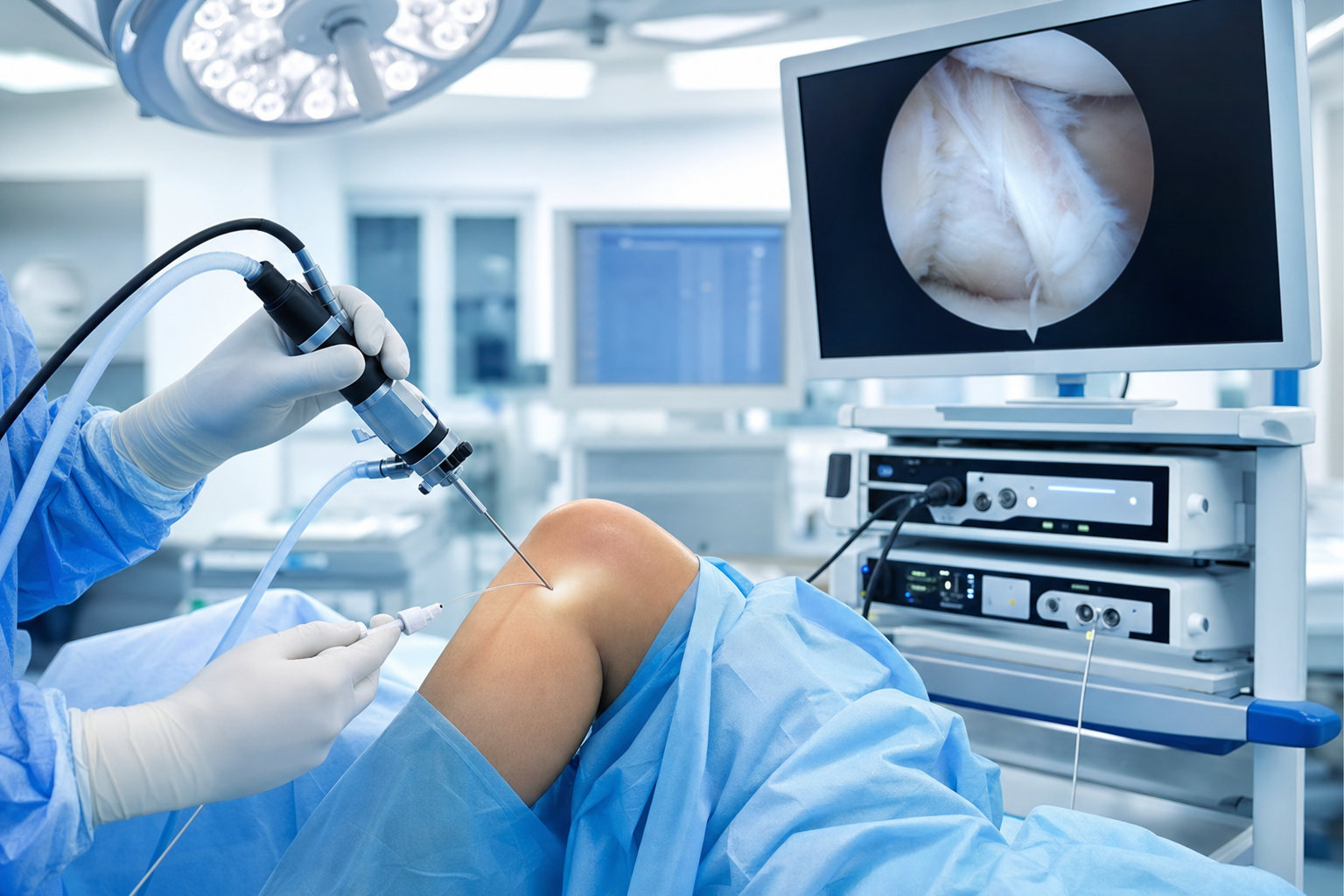
Arthroscopy is in an unusually active phase of innovation. Several developments that were experimental a decade ago are now entering routine practice, while others remain promising but unproven. For the clinician, the task is to separate genuine advances from marketing, and to adopt new tools where the evidence and the patient benefit justify it. Here are the developments shaping the field, with an honest note on where each one stands.
Needle and office-based arthroscopy
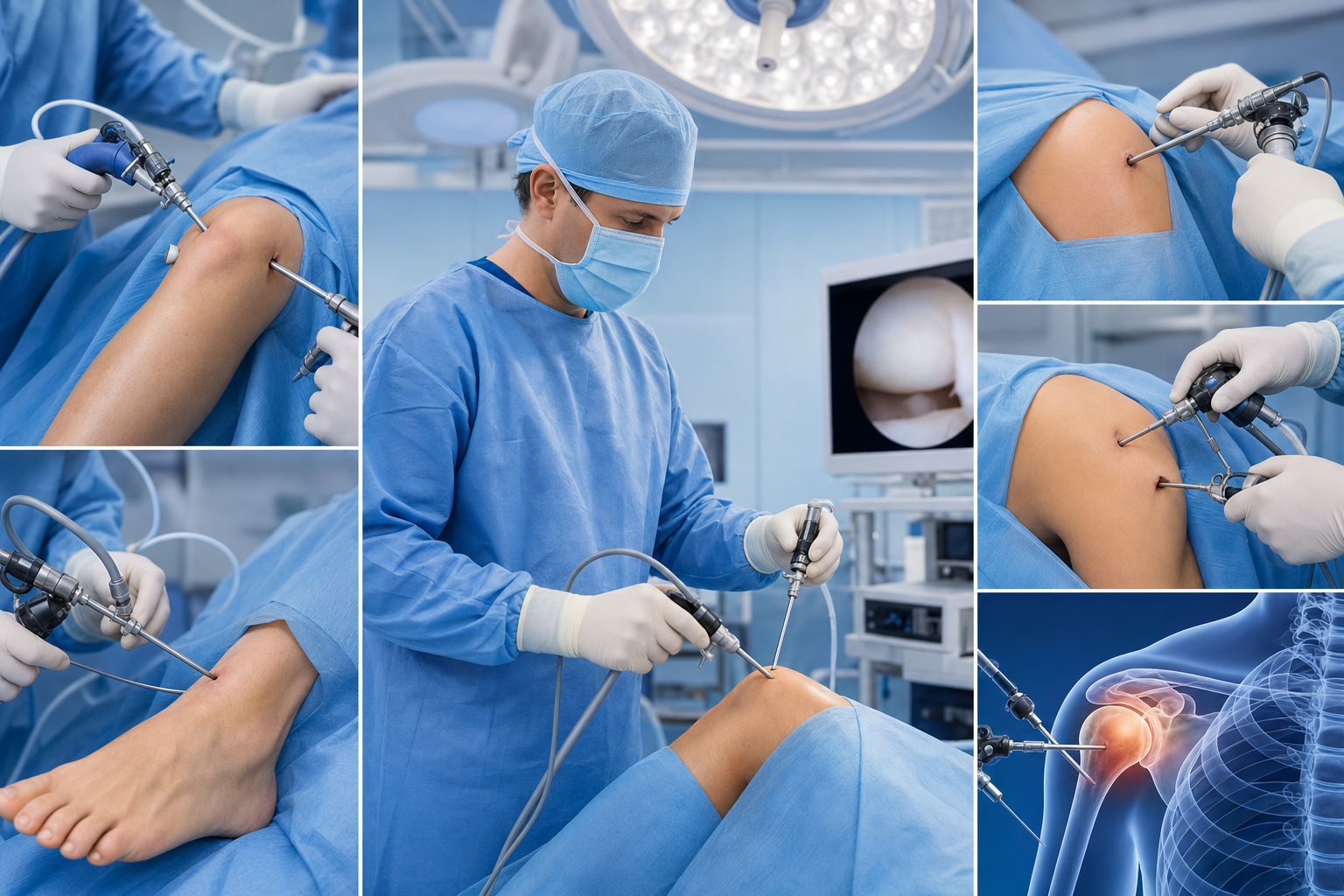
Perhaps the most visible shift is the move of arthroscopy out of the operating theatre and into the clinic. Needle arthroscopy uses very small semi-flexible cameras, on the order of two millimetres, to inspect a joint under local anesthesia while the patient is awake. For diagnosis, it offers direct visualisation of intra-articular structures without the cost, delay, or radiation of some imaging pathways, and studies of the knee have found it comparable to MRI for assessing meniscal pathology while shortening the time from injury to a management plan.
The range of what can be done awake in the office is expanding to include selected therapeutic procedures. The advantages are convenience, cost, and speed. The caveats are real: the field of view and instrumentation are more limited than a full theatre setup, patient selection matters, and the evidence base for office-based treatment, as opposed to diagnosis, is still maturing. Used judiciously, it is a valuable addition rather than a replacement for formal arthroscopy.
Better optics and single-use scopes
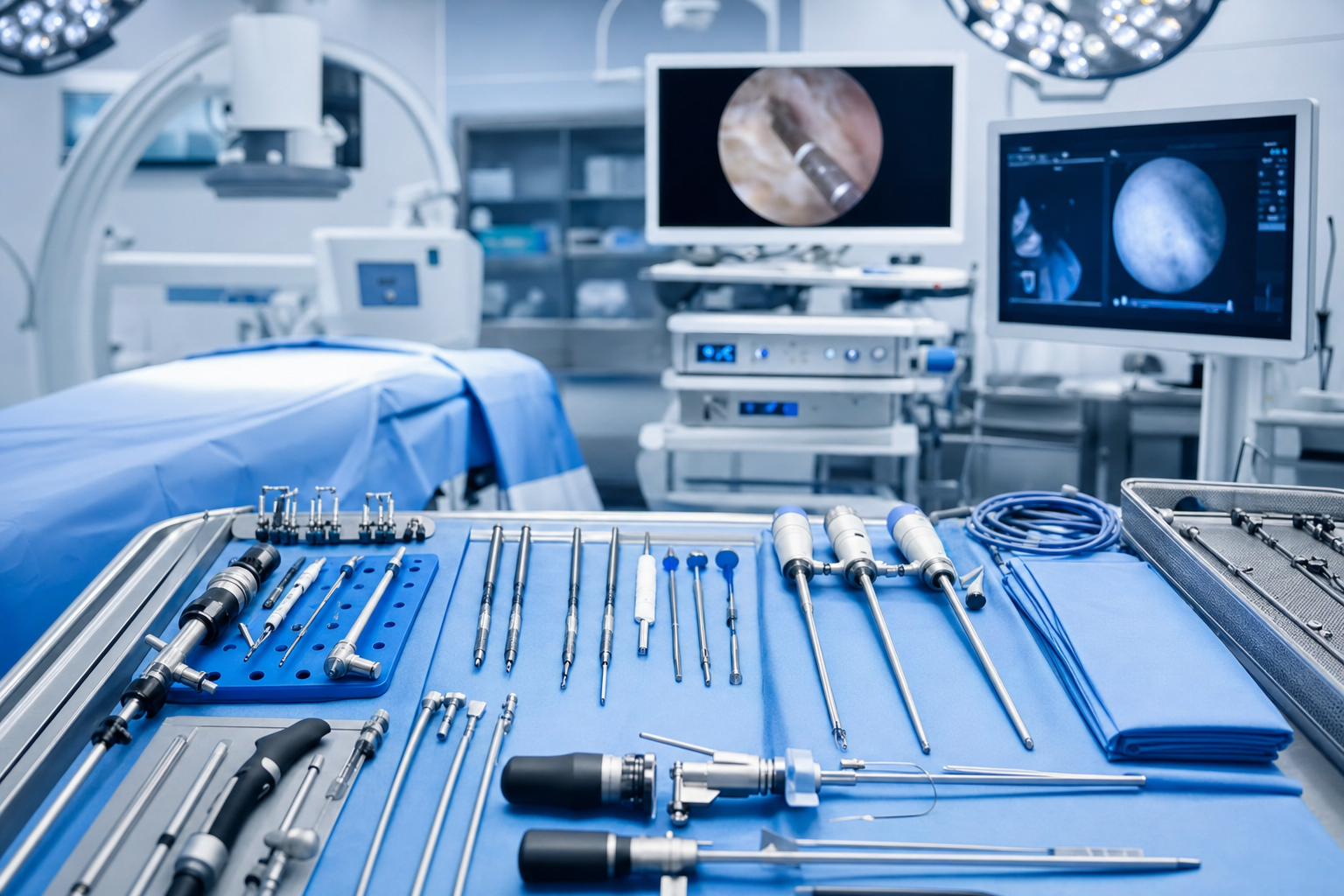
Visualisation continues to improve. 4K and high-dynamic-range imaging, chip-on-tip sensors, and improved illumination give a clearer, more detailed view than the previous generation of scopes. In parallel, single-use arthroscopes have entered the market, offering a sterile, ready-to-use scope for every case without reprocessing. Early augmented-reality overlays and enhanced-image modes are being explored, though these remain early in their clinical journey. The practical questions for each unit are image quality, cost per case, and environmental impact rather than novelty alone.
Orthobiologics
Few areas generate more interest, or more confusion, than orthobiologics. Platelet-rich plasma (PRP) and bone marrow aspirate concentrate (BMAC) are increasingly offered as adjuncts. The honest summary is that the evidence is heterogeneous. Consensus statements from bodies including the AAOS and ESSKA support leukocyte-poor PRP for symptom relief in mild to moderate knee osteoarthritis, and BMAC has support as an adjuvant in settings such as rotator cuff repair and focal cartilage defects. At the same time, preparation methods, dosing, and even the definitions used vary widely, long-term data are limited, and results should not be oversold to patients. The establishment of dedicated orthobiologics registries reflects a field trying to hold itself to a higher evidentiary standard. Offer these treatments with clear, honest counseling about what is and is not known.
All-suture and knotless anchors
Fixation hardware has become smaller and smarter. All-suture anchors use a much smaller bone tunnel than traditional solid anchors, which preserves bone stock, allows more anchors to be placed, and avoids leaving a hard body in the joint if fixation fails. Prospective randomized data have shown clinical performance equivalent to established solid anchors at short-term follow-up in rotator cuff and labral repair. Knotless constructs and suture tape reduce the variability of hand-tied knots and can simplify complex repairs. As with any implant, technique and indication matter more than the device itself.
Wide-awake surgery and day-case pathways
The combination of better regional anesthesia and local infiltration techniques has made wide-awake and ambulatory arthroscopy increasingly practical. Selected wrist and small-joint procedures can be done under local anesthesia without a tourniquet, and most larger-joint arthroscopy is now performed as day surgery. Enhanced recovery principles, ultrasound-guided nerve blocks, opioid-sparing analgesia, and structured discharge criteria shorten recovery and improve the patient experience while reducing system costs.
How to adopt sensibly
The common thread across these advances is that each offers a genuine benefit in the right hands, and each can disappoint if adopted uncritically. A reasonable posture is cautious enthusiasm: pilot new tools in appropriate cases, measure outcomes, counsel patients honestly about uncertainty, and let evidence rather than novelty drive wider adoption. The most valuable advance of all may be the field's growing insistence on measuring what it does, through registries and patient-reported outcomes, so that tomorrow's best practice rests on better data than today's.
Sharing this with a patient? The plain-language guides live in the patient lane.
Cross over →Part of Mauritius' growing medical-technology network. Explore the wider Medtech medical-technology network.