Arthroscopy for Athletes: When It Helps and When It Doesn’t
9 July 2026 · By Arthroscopy Mauritius

Why athletes ask about arthroscopy
Athletes often want one thing, a fast and safe return to sport. When pain, swelling, catching, or instability do not settle with rest and rehabilitation, arthroscopy may be discussed as a way to diagnose and treat the problem through small incisions. It is commonly used in sports medicine because it can address many joint injuries with less soft tissue disruption than open surgery.
But arthroscopy is not a shortcut for every sports injury. The best outcomes come from matching the procedure to the right problem, at the right time, in the right athlete. That is why it helps to understand when arthroscopy is truly useful, and when it may not add value.
Common sports injuries that may be treated arthroscopically
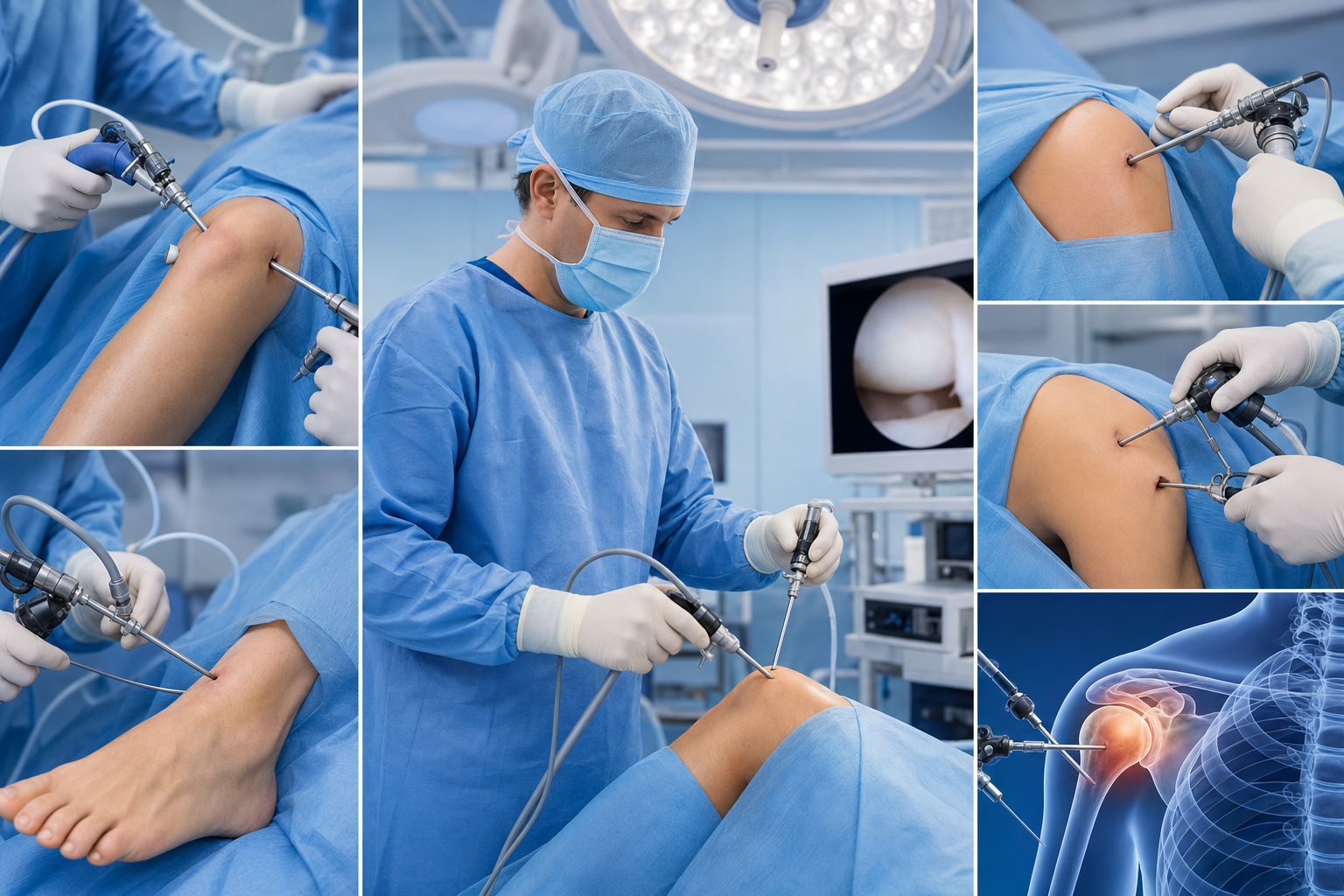
Arthroscopy is used in several joints, especially the knee, shoulder, ankle, and sometimes the hip. In athletes, the most common reasons include:
- Meniscus tears in the knee, particularly tears causing locking or persistent symptoms
- Cartilage injuries, including loose fragments that cause catching or swelling
- ACL related problems, often as part of reconstruction rather than simple arthroscopy alone
- Shoulder instability, including labral injuries after dislocation
- Rotator cuff tears in selected active patients
- Ankle impingement or loose bodies after sprains
- Hip labral tears and femoroacetabular impingement in carefully selected cases
The exact procedure depends on the injury, the joint, and the athlete’s sport and goals. A football player with repeated knee swelling may need a very different plan from a swimmer with shoulder pain or a runner with hip impingement.
When arthroscopy is most helpful
Arthroscopy tends to be most useful when there is a clear mechanical or structural problem. Examples include:
- A torn meniscus that causes locking, catching, or recurrent swelling
- A loose piece of cartilage or bone inside the joint
- A labral tear with instability or mechanical symptoms
- A rotator cuff tear that is unlikely to heal well with rehab alone
- Persistent impingement that limits sport despite a full non-surgical program
In these situations, arthroscopy can both confirm the diagnosis and treat the problem in the same setting. That can reduce uncertainty and may shorten the path back to training, provided recovery is well managed.
For many athletes, the biggest benefit is not just pain relief, but improved function. The goal is to restore stability, motion, and confidence so that sport can be resumed safely.
When arthroscopy may not be the best next step
It is important to be cautious about using arthroscopy for pain alone. Some sports injuries improve without surgery, especially when symptoms are driven by inflammation, overload, or muscle imbalance rather than a repairable structural lesion.
Arthroscopy may offer limited benefit when:
- Pain is mild and improving with physiotherapy
- The joint is stable and there are no mechanical symptoms
- Imaging does not show a surgical problem
- The main issue is poor conditioning or movement control
- Degenerative changes are the main finding rather than an acute sports injury
This is especially relevant for knee pain in adults, where studies have shown that not every meniscus finding needs surgery, particularly when osteoarthritis is also present. In these cases, rehabilitation, load management, and strengthening can be more effective than a procedure.
A good surgical consultation should include a discussion of whether arthroscopy is likely to change the outcome, not just whether it can be done.
What affects return to sport
Return to sport depends on more than the operation itself. The type of injury, the tissue repaired or removed, the sport demands, and the athlete’s baseline fitness all matter.
Some general principles apply:
- Simple procedures may allow a quicker return than repairs that need biological healing
- Meniscus trimming often recovers faster than meniscus repair
- Cartilage procedures may require a longer, more protected recovery
- Shoulder stabilization usually needs a structured rehab plan before contact sport resumes
- ACL reconstruction, although often done arthroscopically, is a major rehabilitation process that usually takes months, not weeks
Rushing back too early raises the risk of re-injury. A better target is return to sport when pain is controlled, swelling is minimal, strength is restored, and movement quality is good. Functional testing is often more useful than time alone.
Why rehabilitation matters as much as surgery
Arthroscopy can fix a structural problem, but it does not automatically restore performance. Athletes still need rehabilitation to recover range of motion, strength, coordination, and sport-specific control.
A strong rehab plan usually includes:
- Early control of swelling and pain
- Gradual restoration of motion
- Muscle activation and strengthening
- Balance, agility, and landing mechanics when relevant
- A graded return to running, pivoting, throwing, or overhead work
The best results happen when surgeon, physiotherapist, and athlete work together. In fact, some athletes do well without surgery because a thoughtful rehab program addresses the root cause. That is why a non-operative trial is often part of high-quality care.
Questions athletes should ask before agreeing to arthroscopy
Before surgery, ask clear, practical questions:
- What exactly is the diagnosis?
- Is this a repair, a cleanup, or a reconstruction?
- What evidence suggests arthroscopy will help me?
- What are the risks of waiting and trying more rehabilitation?
- How long until I can walk, train, and return to full sport?
- What are the chances I will need further treatment later?
- What rehab plan will I need after surgery?
These questions help athletes avoid two common mistakes, having surgery too early, or delaying too long when a repairable problem is causing ongoing damage.
A balanced view for athletes in Mauritius
For active people in Mauritius, sport is often part of daily life, whether it is football, running, volleyball, surfing, or recreational gym training. Arthroscopy can be a valuable option when a clear joint problem is preventing participation, but it should be chosen thoughtfully.
Weather, work schedules, travel, and access to rehabilitation all influence recovery. A realistic plan matters as much as the procedure itself. If you cannot commit to post-operative rehab, the outcome may be poorer even if the surgery is technically successful.
Athletes should also remember that pain is not always a sign that surgery is needed. Sometimes the best treatment is time, load modification, and a progressive rehab program guided by a sports medicine team.
Practical conclusion
Arthroscopy can be an excellent tool for athletes when there is a specific structural joint problem, especially one that causes locking, instability, loose bodies, or persistent symptoms despite rehabilitation. It is less helpful when pain is nonspecific, improving, or related mainly to overload and poor mechanics.
The right decision is not just about whether arthroscopy is available, but whether it is likely to improve function, protect the joint, and support a safe return to sport. If you are an athlete considering surgery, ask for a diagnosis, a clear treatment goal, and a rehab plan that matches your sport and timeline. That is the most reliable path back to play.
Part of Mauritius' growing medical-technology network. Explore the wider Medtech medical-technology network.