Shoulder arthroscopy explained
The shoulder is the second most common joint treated with arthroscopy, after the knee. It is a remarkably mobile joint, which is part of why it can be prone to injury. Keyhole surgery gives surgeons a clear, magnified view inside the shoulder and lets them repair many problems through small openings. If you have shoulder arthroscopy ahead of you, here is what it involves and how recovery tends to unfold.
What it can treat
Because the shoulder has so many working parts, arthroscopy is used for a wide range of conditions, including:
- Rotator cuff tears, involving the group of tendons that lift and rotate the arm
- Labral tears, including SLAP tears, where the rim of cartilage around the socket is damaged
- Shoulder instability, where the joint dislocates or partly slips out, often needing repair of torn tissue such as a Bankart lesion
- Impingement, where tendons are pinched, sometimes treated by making more space (subacromial decompression)
- Biceps tendon problems
- Loose fragments of cartilage or bone
- Inflamed tissue, and some cases of frozen shoulder
Surgeons generally turn to arthroscopy when pain or instability has not settled with rest, medication, injections, and physiotherapy, or when a scan shows damage that needs repair.
How the procedure is done
Shoulder arthroscopy is usually a day case, or outpatient, procedure, so most people go home the same day. It is commonly performed with a regional nerve block that numbs the shoulder and arm, often combined with sedation or a general anaesthetic so you are comfortable throughout. Your anaesthetist will talk you through the plan.
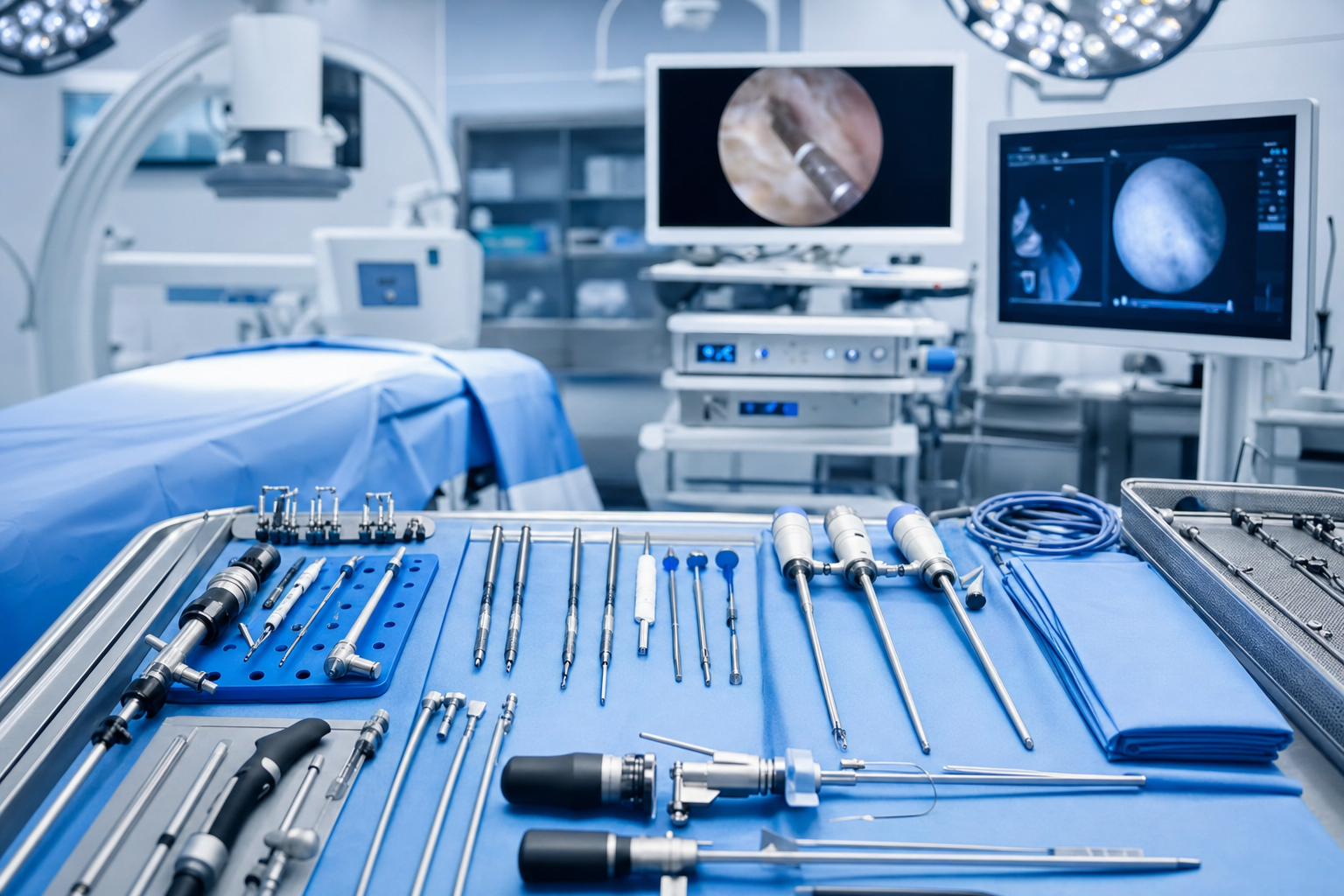
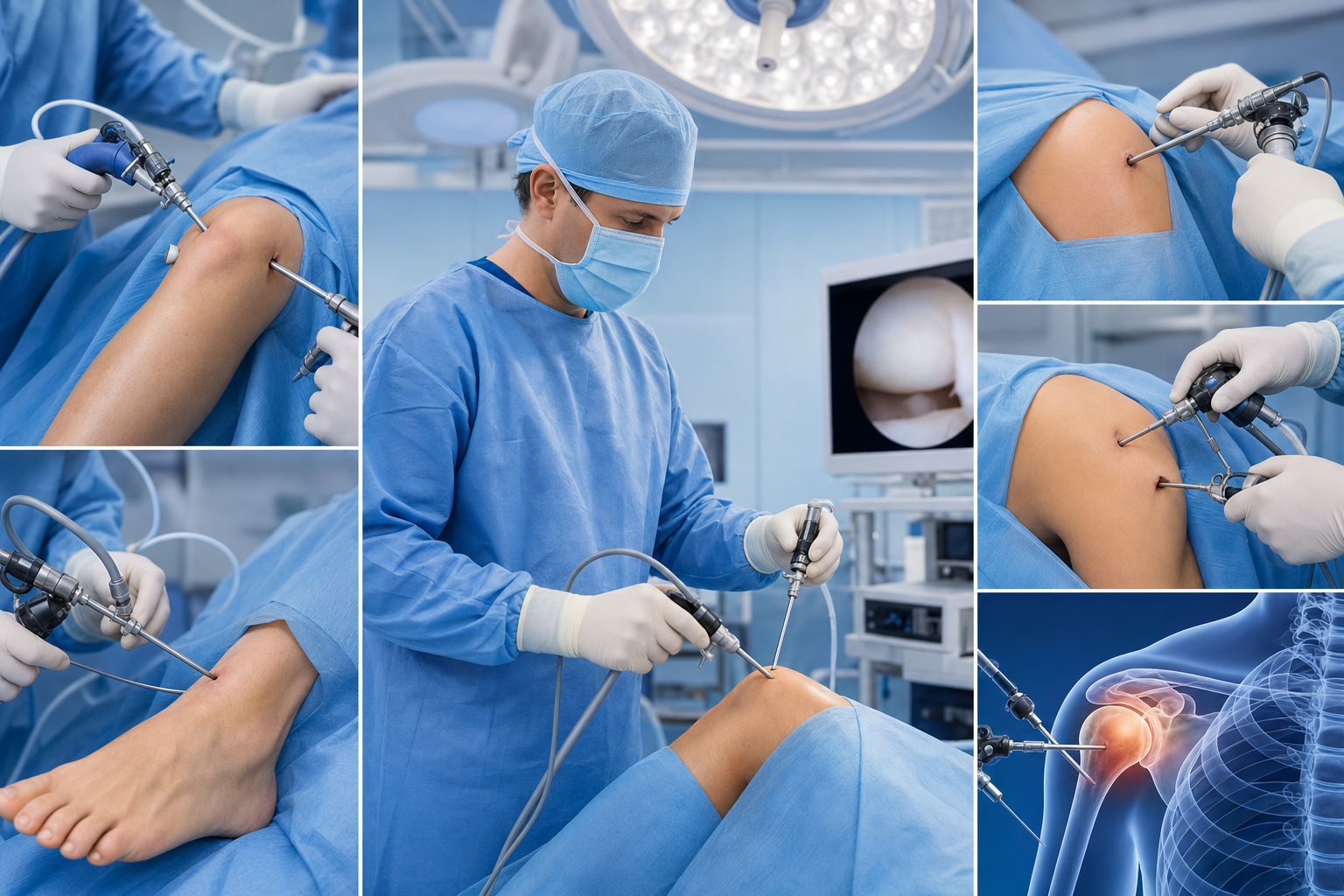
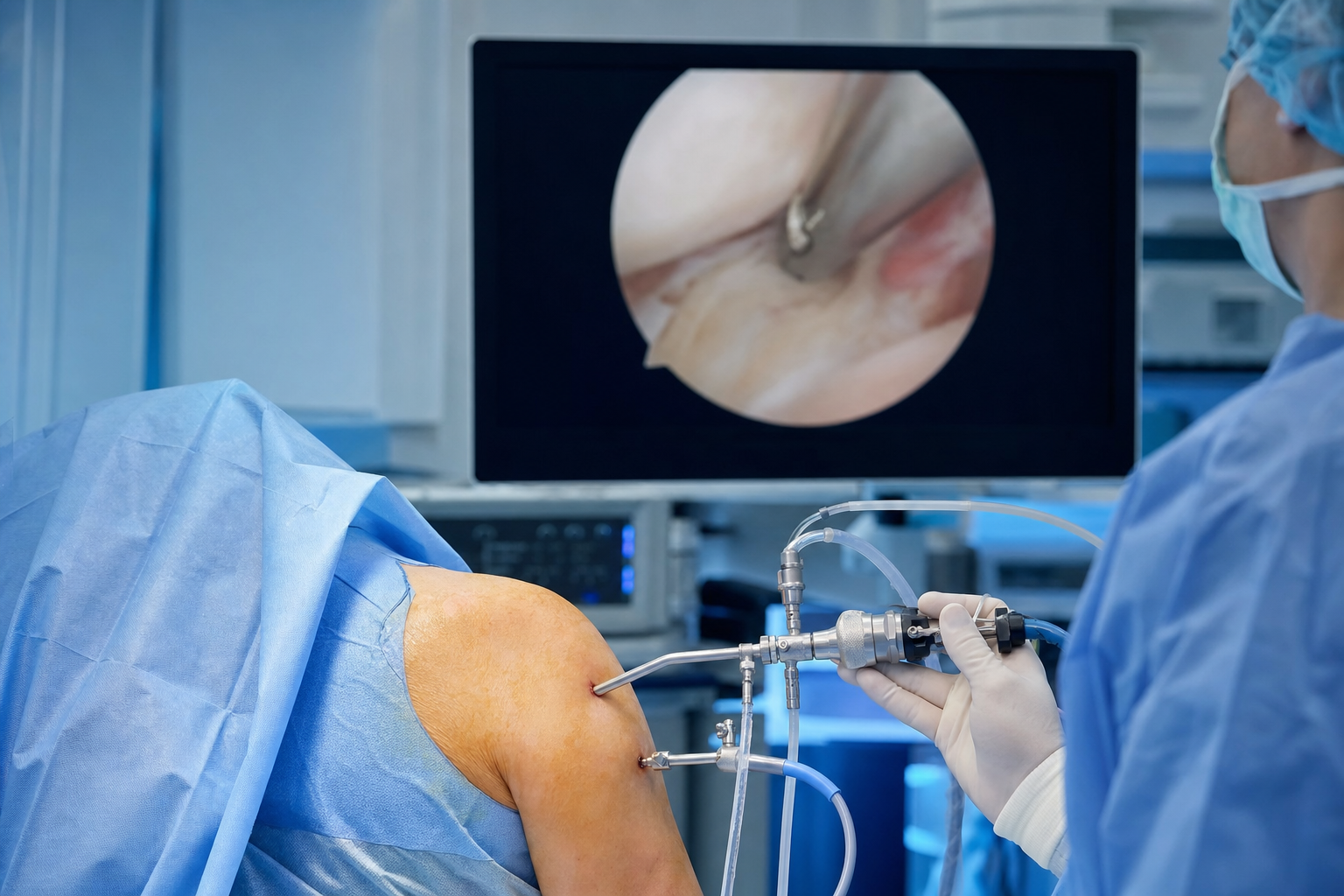
The surgeon makes a few small incisions around the shoulder. Sterile fluid is used to gently expand the joint and improve the view, then the arthroscope is inserted so the team can inspect the joint on a screen. Fine instruments passed through the other portals are used to trim, stitch, or reattach tissue as needed. Many repairs use tiny anchors to hold tendon or cartilage back onto the bone. Most shoulder arthroscopies take between one and two hours, depending on what needs to be done.
The first hours and days
After surgery you will rest in the recovery area, usually for an hour or two, and your arm will be placed in a sling before you go home. Some soreness and swelling is expected. You will be given pain relief and guidance on caring for the small wounds, which usually heal within a week or two.
The sling does an important job. It rests the shoulder and protects the repair while the early healing takes place. How long you wear it depends on what was done, and your surgeon will give you a specific timeframe. As a general guide, a sling is often used for several weeks after a repair such as a rotator cuff or labral procedure.
Recovery and rehabilitation
Shoulder recovery is a gradual, staged process, and patience pays off. Rehabilitation is usually organised in phases:
- Protect and settle. In the early weeks the focus is on controlling pain, allowing tissue to heal, and gentle passive movements, where the arm is supported and moved for you rather than by your own muscles.
- Restore movement. As healing allows, you progress to moving the arm yourself and rebuilding range of motion.
- Rebuild strength. Later still, strengthening exercises and resistance work help return power and control to the shoulder.
Full recovery commonly takes in the region of three to six months, and sometimes longer for larger repairs. This can feel slow, especially in the first weeks, but rushing risks the repair. Working closely with your physiotherapist, and doing your home exercises, is the single biggest thing you can do to influence the result.
Warning signs to watch for
Serious problems are uncommon, but contact your surgical team promptly if you notice:
- A fever or chills
- The wound becoming hot or red, or leaking fluid
- Increasing pain that is not helped by your medication
- New numbness or tingling in the arm or hand
- Significant bleeding or swelling
A realistic, hopeful outlook
Shoulder arthroscopy is well established and generally very safe, and for the right problem it can relieve pain, restore stability, and get you back to the activities you value. Recovery does ask for commitment, particularly during the weeks in a sling and the months of rehabilitation. Knowing the plan in advance, setting up help at home for the early period, and pacing yourself through each phase will help you get the best possible outcome.
Are you a clinician or surgeon? Read the technique-level pieces in the clinician lane.
Cross over →Part of Mauritius' growing medical-technology network. Explore the wider Medtech medical-technology network.