Knee arthroscopy: what to expect
The knee is the joint most often treated with arthroscopy, so if yours has been recommended you are in very common company. Whether the plan is to tidy a torn cartilage, repair a ligament, or clear out loose fragments, knowing what happens before, during, and after surgery can take a lot of the worry away.
Why the knee suits keyhole surgery
The knee is a roomy joint with clear structures the surgeon can reach through small portals. Common reasons for knee arthroscopy include:
- A torn meniscus, the C shaped cartilage that cushions the joint
- Damaged or torn cruciate ligaments, including work related to the anterior cruciate ligament (ACL)
- Damaged articular cartilage on the surfaces of the bones
- Loose pieces of bone or cartilage floating in the joint
- Inflamed joint lining (synovium)
- Certain kneecap (patella) problems
Your surgeon will usually reach for arthroscopy after examining your knee, reviewing scans such as an MRI, and finding that simpler measures have not helped.
A word on the meniscus
Many knee arthroscopies involve the meniscus, and it helps to understand the two main approaches. A partial meniscectomy trims away the torn, unstable part of the cartilage. A meniscus repair stitches the tear so it can heal. Which one is possible depends on where the tear is and how healthy the tissue is, because only certain parts of the meniscus have a good enough blood supply to heal. This choice matters a great deal for your recovery, as we explain below.
Before the day
Once surgery is agreed, you will usually have a pre operative check to confirm you are fit for anaesthesia. You may be asked to stop eating and drinking for a set number of hours beforehand, and to pause certain medications. This is a good moment to ask questions and to arrange help at home, since you will not be able to drive yourself back.
During the procedure
Knee arthroscopy is normally a day case operation, meaning you go home the same day. The anaesthetic may be general (you are asleep), regional (numb from the waist down), or occasionally local. Your surgeon and anaesthetist will recommend the best option for you.
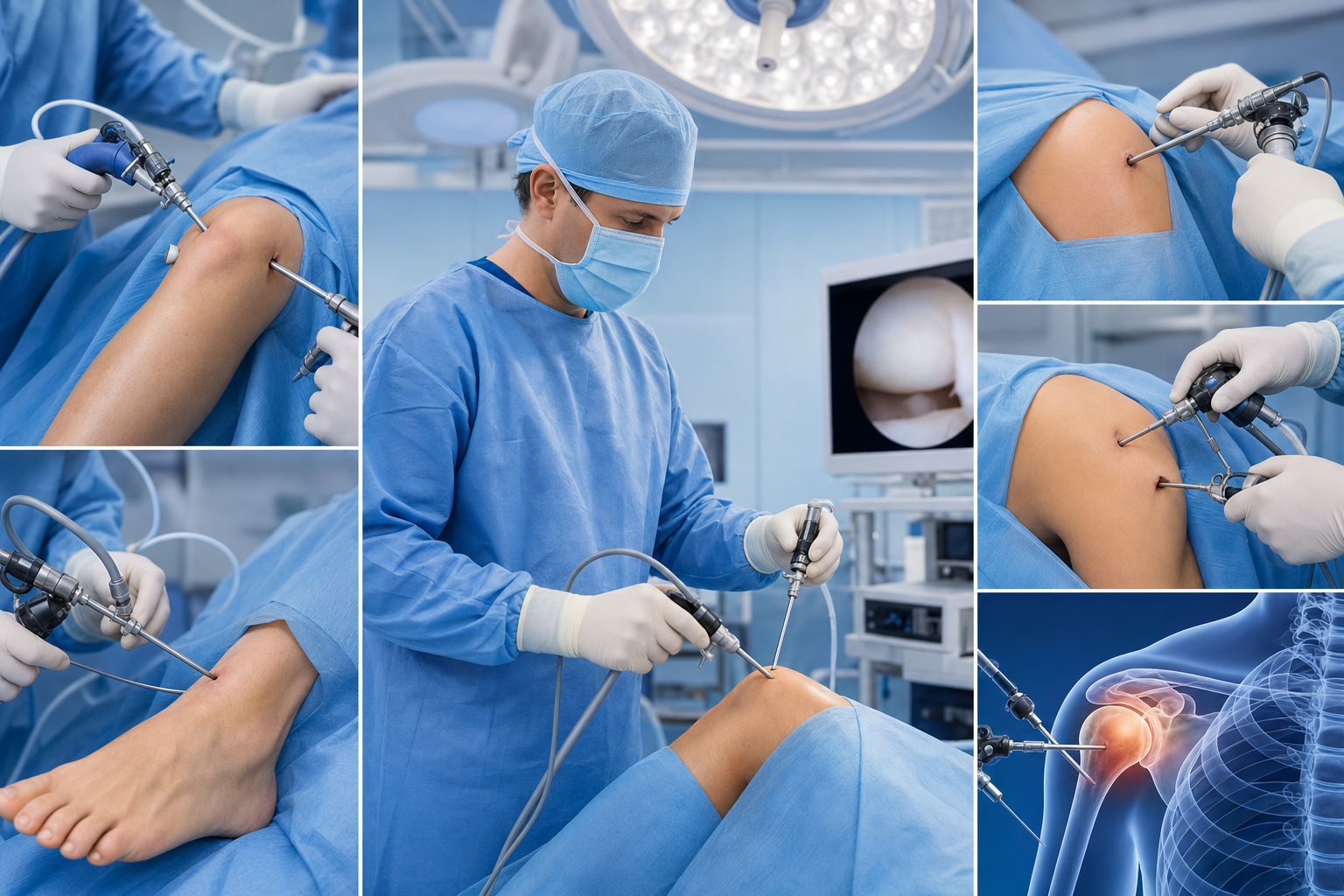
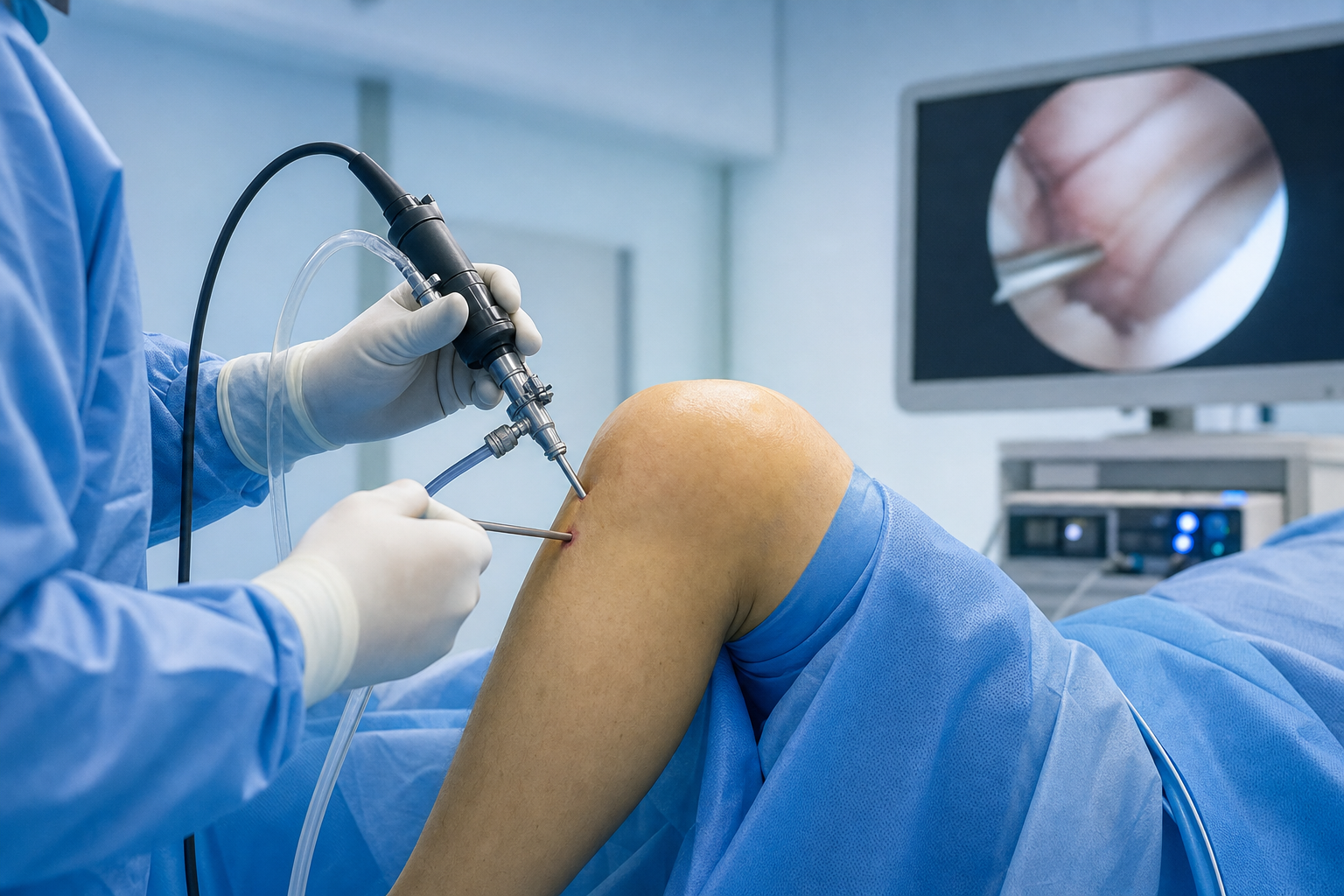
The surgeon makes a few small portals around the front of the knee, fills the joint with sterile fluid for a clear view, and inserts the arthroscope. Watching the monitor, they inspect all parts of the joint and then carry out the repair with fine instruments. Most knee arthroscopies take under an hour, although more complex repairs take longer.
After you wake up
You will spend a short time in the recovery area, often one to two hours, before going home. Your knee will be bandaged, and it is normal for it to feel swollen and a little sore at first. You will be given pain relief and simple advice, usually built around rest, elevating the leg, and using ice to control swelling.
How soon you put weight on the knee depends on what was done. This is where the meniscus choice returns:
- After a meniscectomy or a simple clean up, many people are allowed to put weight on the leg the day after surgery, often with crutches for support at first.
- After a meniscus repair, or a ligament or cartilage procedure, you may need crutches for longer and sometimes a brace, to protect the healing tissue.
The recovery timeline
Recovery varies from person to person and depends heavily on the procedure.
For a straightforward meniscectomy, rehabilitation often takes in the region of four to six weeks, and many people return to most activities within six to eight weeks, sometimes sooner. A meniscus repair asks for more patience, because stitched cartilage needs time to knit. Recovery here is commonly in the range of three to four months, and full return to sport can take longer.
Physiotherapy is central to a good result. Guided exercises restore movement, rebuild the muscles that support the knee (especially the quadriceps at the front of the thigh), and help you return to activity safely. Doing your exercises as prescribed genuinely influences how well and how quickly you recover.
Warning signs to watch for
Most recoveries are smooth, but call your surgical team promptly if you notice:
- A fever, chills, or the wound becoming hot, red, or leaking fluid
- Pain or swelling that gets worse rather than better
- Calf pain, tenderness, or swelling
- Shortness of breath or chest pain
The last two can be signs of a blood clot, which is uncommon but needs urgent attention.
Staying positive
Knee arthroscopy is one of the most frequently performed orthopaedic procedures, and for the right problem it can relieve pain and restore function with a gentle recovery. Understanding your specific procedure, and following the rehabilitation plan your team gives you, is the surest way to get the most from it.
Are you a clinician or surgeon? Read the technique-level pieces in the clinician lane.
Cross over →Part of Mauritius' growing medical-technology network. Explore the wider Medtech medical-technology network.