What is arthroscopy? A clear guide for patients
10 June 2026 · By Arthroscopy Mauritius
What is arthroscopy? A clear guide for patients
If your doctor has mentioned arthroscopy, you may be picturing a big operation and a long stay in hospital. In most cases, the reality is much gentler. Arthroscopy is a form of keyhole surgery for joints, and for many people it means small incisions, a short visit, and a quicker return to everyday life than open surgery would allow.
This guide explains what arthroscopy is, why it is done, which joints it can help, and what makes it different from traditional surgery.
The word itself
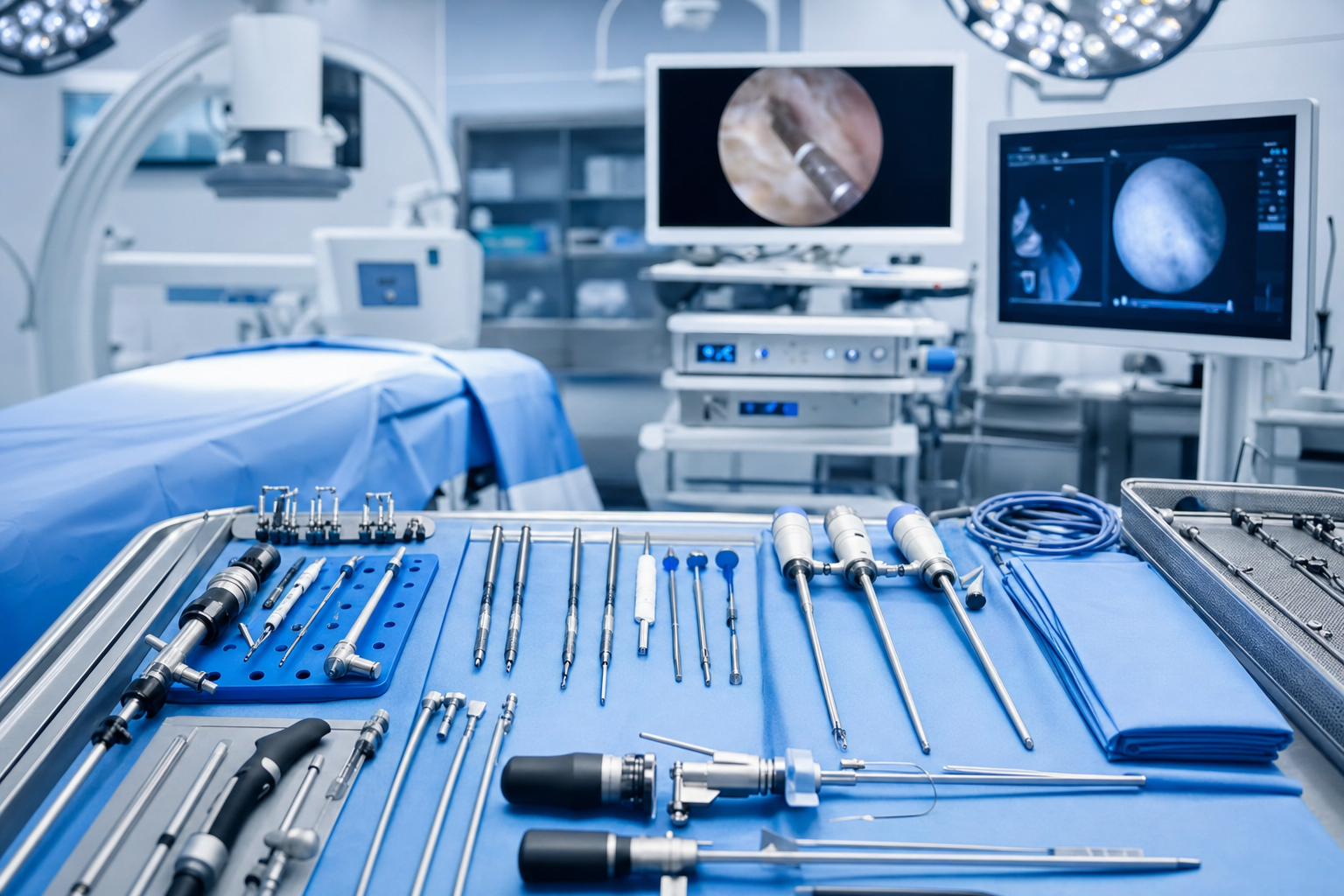
The name comes from two Greek words: "arthro", meaning joint, and "skopein", meaning to look. So arthroscopy literally means looking inside a joint. A surgeon does this using an arthroscope, a thin instrument about the width of a pencil that carries a small camera and a light.
How it works
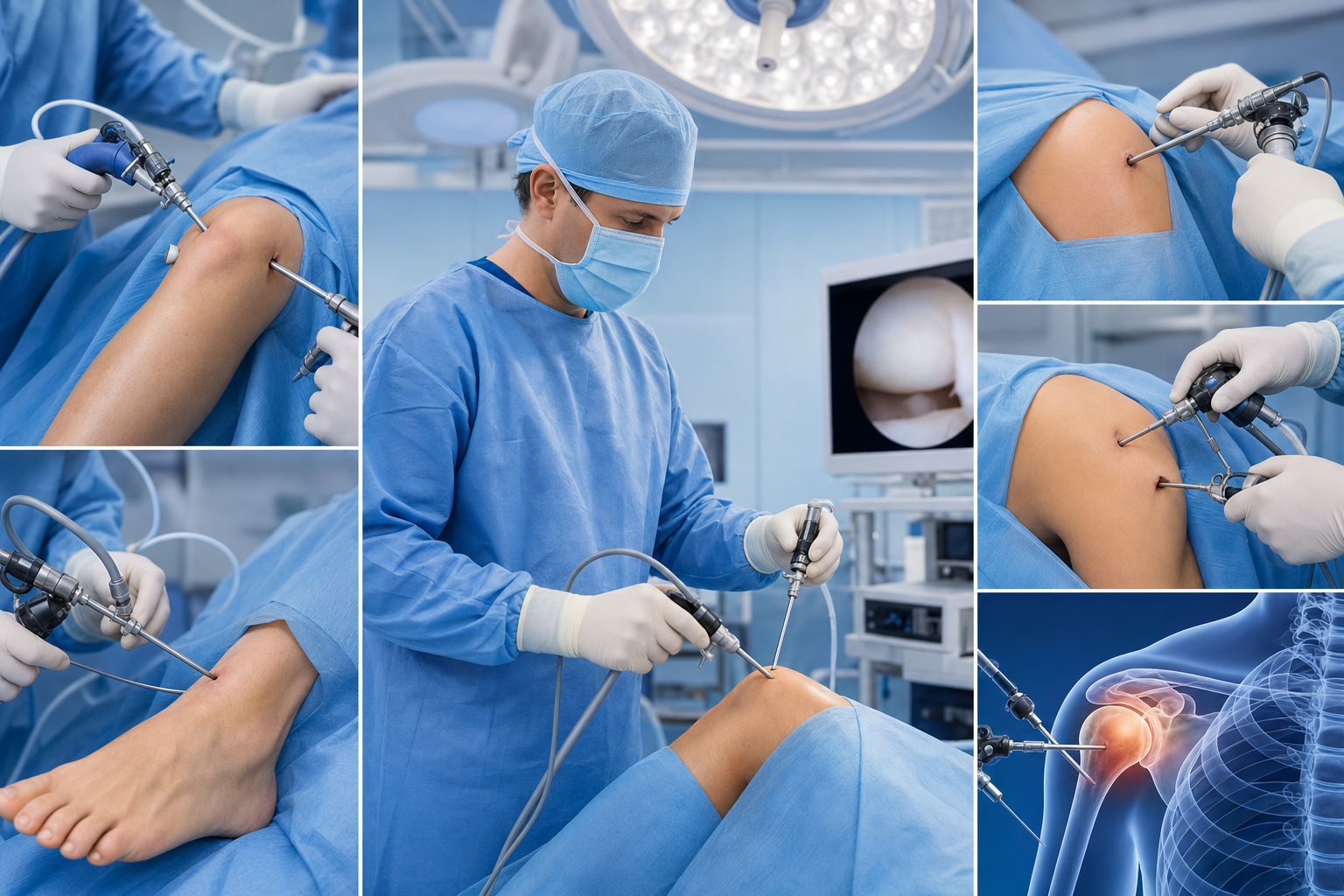
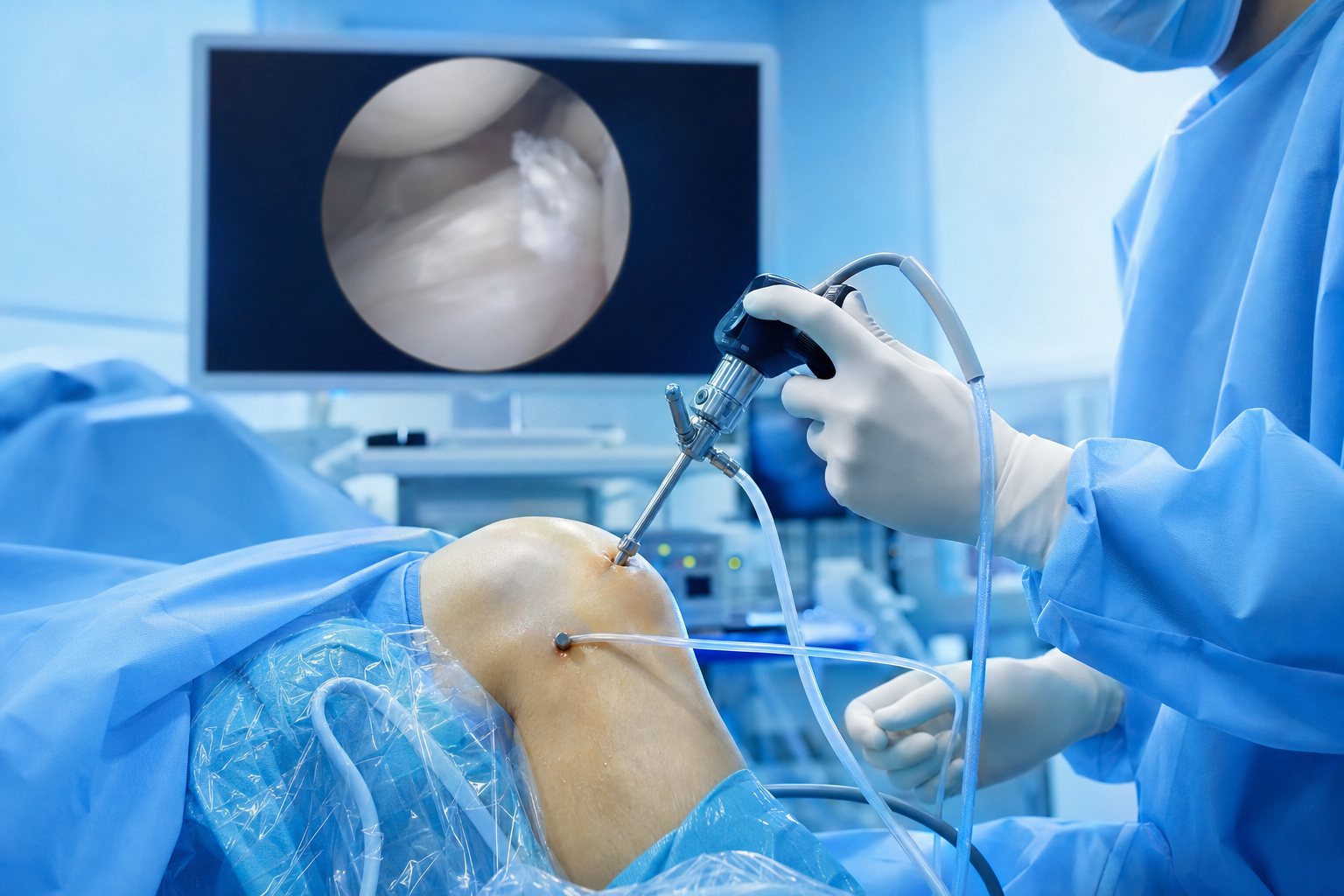
During an arthroscopy, the surgeon makes a few small cuts around the joint, often called portals. Each is usually less than a centimetre long. The arthroscope goes through one portal and sends a magnified, well lit picture of the inside of your joint to a monitor in the operating room. The surgeon watches this screen rather than looking directly into the joint.
To create space and a clear view, sterile fluid (a salt water solution) is gently flowed into the joint. This washes away debris and separates the tissues so the surgeon can see clearly. If a problem needs treating, fine instruments are passed through the other small portals. These can trim, repair, stitch, smooth, or remove tissue, all while the surgeon works from the camera view. Because the camera magnifies the image, the surgeon can often see fine detail more clearly than with the naked eye.
Why it is done
Arthroscopy has two main uses.
The first is to diagnose. When scans such as an MRI do not give a full picture, looking directly inside the joint can confirm exactly what is wrong.
The second, and now the most common, is to treat. Modern arthroscopy lets surgeons fix a wide range of problems without opening the joint fully. Typical examples include trimming or repairing torn cartilage, reattaching or tightening damaged ligaments or tendons, removing loose fragments of bone or cartilage, and cleaning out inflamed tissue.
Arthroscopy is usually considered when simpler treatments such as rest, medication, injections, and physiotherapy have not settled the problem, or when a scan shows damage that needs a hands on repair.
Which joints can be treated
The knee and the shoulder are the joints treated most often, but arthroscopy is now used across the body. Surgeons regularly perform arthroscopy on the:
- Knee, for example meniscus and ligament problems
- Shoulder, including rotator cuff, labrum, and instability
- Hip
- Ankle
- Elbow
- Wrist
As instruments have become smaller and techniques have improved, the list of joints and conditions that can be treated this way keeps growing.
How it compares with open surgery
The main appeal of arthroscopy is that it is minimally invasive. Instead of one large incision that cuts through skin, muscle, and other tissue, the surgeon works through a few small openings. For many patients this can mean:
- Smaller scars
- Less disturbance to the surrounding healthy tissue
- Often a day case procedure, so you go home the same day
- A more comfortable early recovery for many procedures
It is important to be realistic, though. Arthroscopy is still surgery, and it needs anaesthesia, healing time, and usually a course of physiotherapy afterwards. The type of anaesthetic can vary. Some joints are numbed with a regional block while you stay awake or lightly sedated, and others are done under general anaesthesia. Your surgeon and anaesthetist will discuss the best choice for you.
What arthroscopy is not
Arthroscopy is a valuable tool, but it is not the right answer for every joint problem. For some conditions, particularly advanced wear and tear arthritis, keyhole surgery may offer little lasting benefit, and other treatments or a different operation may serve you better. A good surgeon will recommend arthroscopy only when there is a clear, treatable target inside the joint.
The bottom line
Arthroscopy lets a surgeon see and treat problems inside a joint through a few small openings, guided by a camera. It is widely used, well established, and generally very safe. If it has been suggested for you, it is a sign that your team believes there is a specific issue they can address with a gentler approach than open surgery.
The more you understand about the procedure, the more confident you are likely to feel. In the articles that follow we look in detail at what to expect from knee and shoulder arthroscopy, how recovery unfolds week by week, and the questions worth asking your surgeon before the day arrives.
Are you a clinician or surgeon? Read the technique-level pieces in the clinician lane.
Cross over →Part of Mauritius' growing medical-technology network. Explore the wider Medtech medical-technology network.